
We're in network with leading health plans






Brightline services are available in person and online for families in NY, NJ, and CT
Why families choose Brightline


Care that fits your life
Getting your child support shouldn't be stressful. We offer flexible in-person and online care — so your family can get help in the way that works best for you.

Experts who understand children
Our therapists and psychiatrists know how to connect with children and teens, using evidence-based approaches that help them feel better and move forward.

Support for your whole family
We'll guide you through every step — helping your child make progress and giving you the tools and confidence to keep it going at home.

Why parents love Brightline
“The care we received through Brightline was top notch. The provider knew just how to help and incorporated my daughter's interests into therapy. Our provider had answers on how to help regulate emotions that we'd never considered. The whole process was super streamlined. I can't recommend Brightline enough!”
“Brightline has been a ray of light on our family! We communicate in healthier ways and work through each day and each problem without all the fussing. I'm so thankful for Lauren and the guidance she provided for my son and our family. Our care at Brightline is exceptional!”
“Working with our Brightline therapist has given my son new confidence that he can manage his anxiety through the different techniques given. He also has really benefited from having an adult who is not a parent to talk through his emotions and experiences.”
“My son was very nervous about therapy, but he instantly connected with his therapist and looked forward to chatting with her each week and telling others about his positive experience. I noticed improvements in his mood and behavior after only a few sessions. I'm very thankful for Brightline!”
“I highly recommend placing your child in the amazing care of Brightline's therapists. My child went from instantly aggressive with no remorse to the amazing kid I've always known he could be. I understand him in a better way with the insights provided to me from his therapist and I'm forever grateful. Can’t recommend this program enough.”

Meet our Columbus Circle clinical providers
Brittany Armstrong, LCSW

"My greatest professional passion is the delivery of high-quality mental health care. I am deeply committed to leveraging technology and human-centered design to scale effective, accessible mental health solutions that work for modern families."
Anthony Giammanco, LMHC

“My inspiration to become a therapist was born out of my desire to help others. While this is of course an obvious answer, I truly believe there is nothing more fulfilling than to try and help others to be their best selves.”
Jamila Mclaughlin, LCSW
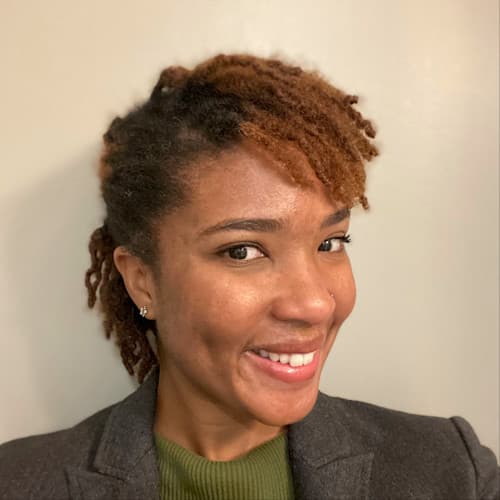
"What excites me most about my profession is the opportunity to see lives transform in meaningful ways. I am passionate about helping kids, teens, and families recognize possibilities, develop greater awareness, and build confidence."
Nikhil Nadkarni, MD

“Prior to becoming a doctor, I had spent time working in leprosy colonies in rural India and there I learned that the social consequences of illness can be profound and often more impactful than the medical consequences of illness. With this in mind, I found my way to Psychiatry, which is the discipline in medicine that I believe is the most attuned to the social determinants of health and the social consequences of mental and physical disorders.”
Jack Reibstein, LMSW

“ I’m inspired by the boundless capacity kids and teens have for imagination, creativity, growth, and change. My hope is that in our sessions, I can create a safe space for them to explore and discover more about themselves."
Zachary Seow, LMSW

“ I’m inspired by the moments where a stumbling block becomes a stepping stone for progress."
Carly Stern, PsyD

“ I’m passionate about providing evidence-based care to kids and their families and adapting interventions to benefit diverse, multicultural populations."
Charlie Xiao, PMHNP

“My inspiration to become a therapist was was raising a son with a serious mental illness. I aspire to use that lived experience to help children and their families overcome mental health challenges.
Get the right care for your child
If your child has been having a hard time — maybe feeling anxious, acting out, or just seeming “off” — you’re not alone. Our pediatric therapists and psychiatrists help kids and teens work through what they’re feeling and guide parents along the way. Not sure what’s happening yet? We’ll help you figure it out and get the right care in place.
Psychological Testing
Autism
Learning differences
Giftedness and school readiness
Memory and cognitive skills
General Therapy
Persistent low mood, lack of motivation, withdrawal
Trauma and stress
Physical symptoms without an identified medical cause
Sustained difficulties with everyday tasks
Anxiety Program
Worries and fears, difficulty concentrating
Physical symptoms (like racing heart)
Feeling nervous, restless, edgy, afraid, or fearful
Avoidance of things they need or want to do
OCD Program
Repeated or ritualized behaviors that are driven by anxiety, fear, or disgust
Overdoing things more than is needed
Fear of not doing something “just right”
Avoiding things they need or want to do
Intrusive thoughts about any number of topics
ADHD Program
Difficulties paying attention
Difficulty sitting still
Distracting or disruptive behaviors
Impulsive actions
Disruptive Behaviors Program
Tantrums and other behavioral upsets
Impulsive actions
Troubling behaviors at school or with friends
Difficulty following directions
Let's get your child feeling better
Ready to take the first step? Here's how to connect with our care team.

In-person and virtual appointments available
Fill out the form below and a member of our team will contact you to discuss your concerns and care options
Want to speak to someone now? Call us at (718) 715-1585 Monday-Friday, 8am-7pm
If you or your child is in crisis, please call 911 or call/text 988 for emergency services
How to find us
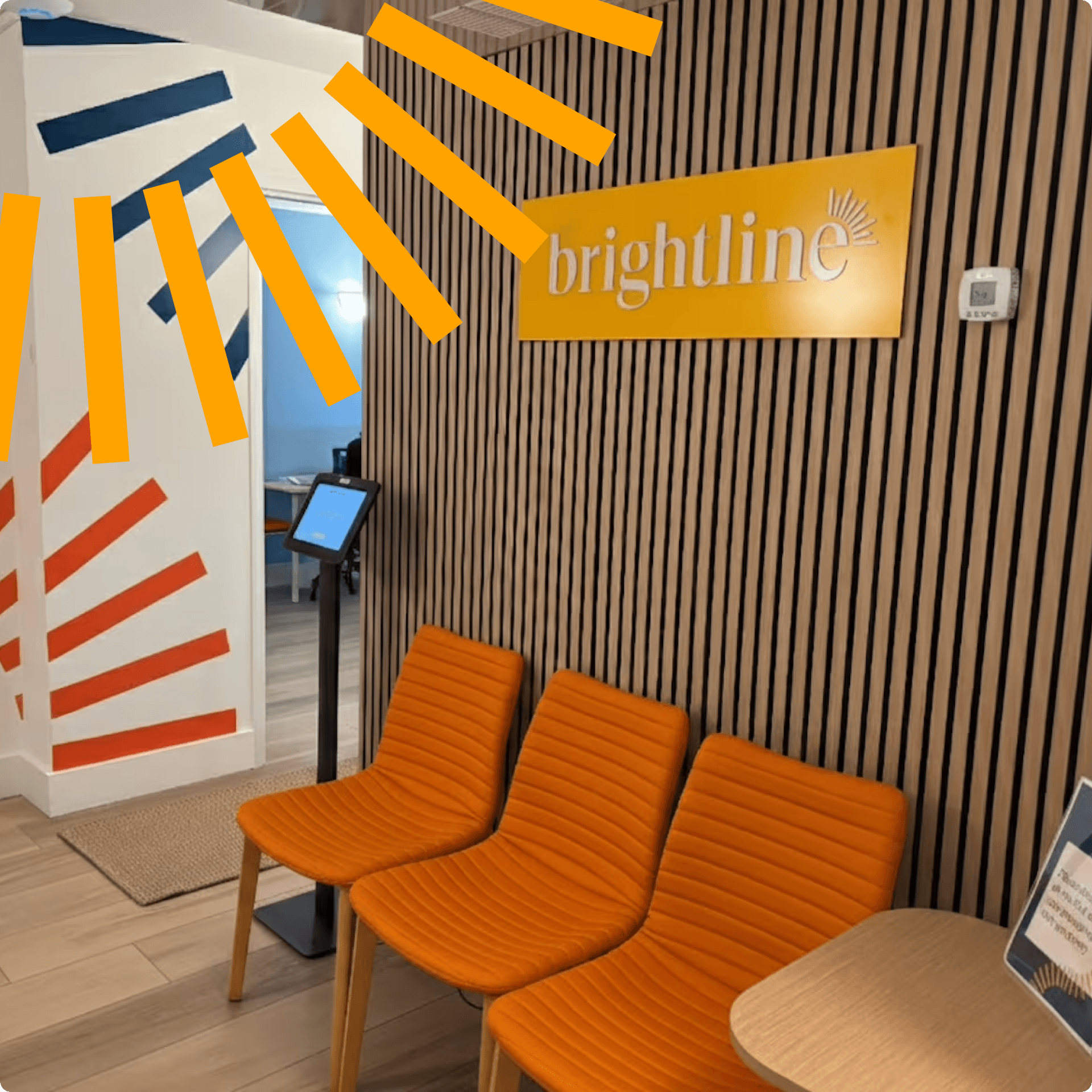
Columbus Circle address and hours
330 W 58th St, # 611
New York, NY 10019
Take the elevator to the 6th floor and go to suite 611 on the right
* Mon–Fri: 8am to 7pm
Public Transportation
* 59 St-Columbus Circle station
Parking and arrival infomation
Parking: An indoor, 24/7 parking garage on the basement level is connected to the lobby. For pricing and availability, please visit poweredbydock.com.
Arriving: Please check in and be ready to show your photo ID at the desk in the lobby. Prepare for Your Brightline Visit: Appointment Prep.
Request an appointment
Please complete the form below to request an appointment at Brightline.
Our Engagement Specialist team will contact you to discuss your situation, explain the process, and schedule your appointment.
Brightline currently provides services in NY, NJ, CT, MA, and WA.
By providing your email and phone number, you agree to receive treatment and marketing related emails and recurring automated text messages (SMS and MMS) from Brightline. Email and SMS consent is not required for delivery of services or care. Message frequency may vary. Message & data rates may apply. You can unsubscribe from emails at any time by clicking the link in our emails. You can opt out of text messages at any time by replying STOP. You will continue to receive necessary transactional email communications such as appointment reminders. See Terms and Privacy Policy.
Brightline care
How old does my child have to be for care?
Brightline supports kids and teens up to age 18. Teens who turn 18 while in our care will continue to receive support as appropriate and if needed, we will create a transition plan for them.
What is Brightline’s approach to care?
We provide specialized mental health care for kids and teens up to age 18, and we rely heavily on evidence-based approaches and state-of-the-science care. Everything you need is in one place — as your child’s needs change, their care plan will evolve.
How do I know if my child actually needs therapy?
Ask us! We will have a structured, in-depth conversation with you and your child to gather details about your child’s developmental history, patterns or changes you’ve noticed, and any concerns you have. Together, we will decide whether your child could benefit from therapy or another type of support.
Will my child be in treatment for a long time?
It depends on what your child needs. Your child’s therapist will partner with you to create an individualized care plan. Part of the plan will include an estimated number of sessions. The number can vary based on two things — the program your child is in and how they progress over time. Our goal is to help your child feel better and to move them out of care once they are equipped with the skills they need to thrive long term.
How involved (or uninvolved) will parents be with sessions?
At Brightline, parents are closely involved in their child’s care. Why? Because it’s central to the way we work (and it’s a core part of the evidence-based care we rely on). This is true both for younger kids and for teenagers. Your involvement might look different depending on your child’s age, developmental ability, and program. We’ll keep the discussion of how/why/why ongoing.
How are parents involved in care for very young kids?
For very young children, parents are a huge part of their child’s care. The parent is the one with the fully developed brain — which means you’re also the one with the hindsight, insight, and foresight to integrate what we do in our sessions into the daily life of your young child. The way we train parents empowers them to use the skills that help with all the tiny, day-to-day interventions. This is so much more effective than having a clinician work with a child one-on-one for an hour a week and then just sending them home. During parent training sessions, sometimes kids are present, sometimes not. For example, if you're here because your child is experiencing separation anxiety, we might practice independence or separating from you, the parent, as part of their treatment.
How are parents involved in care for kids ages 8–12?
For kids in this middle age group, parents should expect to be involved in every session. In some situations, they might even be more involved than their child. For others, parents will need to check in at the beginning or the end of the sessions. And in some cases, the involvement might be more evenly split or include more shared time. The specifics have a lot to do with why you're coming to care and the care plan you co-design with your clinician.
How are parents involved in care for teenagers?
Even with teenagers, parents should still expect to be heavily involved. If they aren’t part of every session, it’s likely they’ll be part of every other. Typically, this looks like parents checking in at the beginning or the end of the session.
What does it mean when you say parents “check in” during a session with their child?
When we say parents are checking in, we don’t mean that we're telling you everything your child said or did when you weren’t there. (People would stop coming to us for care!) Instead, during the check-in time with parents, we’re relying on you for updates about how things have gone over the past week. We’ll ask you what changes you see, about the current symptoms or issues, and your point of view on how skills practice has been going. We’ll also fill you in on any new goals or skills that the child is expected to practice in the upcoming week; the more you know what your child is working on, the more you can support — and not accidentally work against the plan. Lastly, these check-ins are also for you to receive the guidance you need. We know kids don’t come with instructions, so a big part of our job is to teach you the skills you need to rely on during all those hours between sessions.
What kinds of therapy approaches do your clinicians use?
All Brightline therapists and coaches use evidence-based therapies in their care approach. Some examples include Cognitive Behavioral Therapy (CBT), Exposure and Response Prevention (ERP), Parent Management Training (PMT), and Acceptance and Commitment Therapy (ACT). All intervention strategies offered at Brightline are supported by research that shows they work for the types of issues you’re looking to address, and are matched to your child’s needs.
Does Brightline offer focused programs?
Yes. We offer general therapy to support a variety of common mental health challenges, along with four focused programs that specifically address anxiety, obsessive compulsive disorder (OCD), attention-deficit/hyperactivity disorder (ADHD), and disruptive behaviors. All of our programs can include psychiatry, which means that if medication is recommended as part of your child’s progress, you don’t have to go anywhere else to bring that treatment into the care plan.
How long does each program take?
Generally speaking, therapy runs anywhere between 8–16 sessions, and a typical course of psychiatry (including medication management appointments) is between 6–10 sessions. But how long your child stays in treatment depends on what they’re going through and how they respond to care. You’ll get an estimated length of care after your child’s diagnostic evaluation.
How does Brightline ensure its clinicians are up to date with the latest research?
As evidence-based care devotees, we champion lifelong learning and continuing education. Our training director builds learning programs based on the latest research for our team. We hold weekly team meetings and consultation groups (including one-on-one meetings with managers) during which we discuss our clinical approach. Performance evaluations and quality oversight are both closely aligned with our evidence-based practice approach. Lastly, we invest in learning! Our teams receive professional development funds to make it easier for them to keep learning.